
Thanksgiving week. The house is full, the food is out, and everybody drifts toward the lanai. Then someone pauses: it feels oddly warm and still inside, even though there’s a breeze in the yard. The lanai has become the gathering spot with no breeze and all the opinions.
The sun may be part of the story, but it isn’t always the whole one. A screened enclosure is meant to let air move through. If the mesh, panels, or nearby landscaping are getting in the way, the space can feel stuffier than the yard.
For a local assessment of your pool cage, request a free estimate or call 813-447-0431.
Your screen is a filter with holes in it
That’s the simple version. Air moves through the openings in the mesh. If those openings are obstructed, or something blocks the breeze before it reaches the screen, less air moves through the room. A lanai with little air movement can feel much hotter than the thermometer suggests.
That doesn’t mean the screen is the only factor, or that replacing it will cool the space. It means airflow is one useful part of pool cage maintenance to consider when your lanai feels unusually still.
Mesh choice affects airflow, too
A common 18 x 14 pool-and-patio weave has a more open structure, so it generally allows more airflow than a tighter weave. That's the weave most cages went up with, and part of why a new lanai felt breezy when the house was new. 20 x 20 no-see-um mesh is designed to help keep out smaller biting midges, and its tighter openings come with a tradeoff: less airflow than a more open option.
Solar and shade weaves reduce the amount of light passing through, but they aren’t a breeze solution. Pet screen is designed for added durability and is also tighter, so it generally moves less air than a more open pool-and-patio mesh.
One common 18 x 14 pool-and-patio weave has a manufacturer-published solar transmittance figure in the mid-50 percent range. In plain language, a bit more than half the sun still comes through. That figure describes sunlight passing through the mesh, not airflow. Solar mesh isn’t blackout, and no mesh choice can promise a cooler lanai on its own.
The right screen depends on what matters most in your home: airflow, insect protection, durability, or sun control. Explore the options on our screen types page, and request a free estimate or call 813-447-0431 to talk through what fits your space.
Why a cage that used to breathe can feel still
Over time, pollen, road dust, salt-air film, and algae can build up in the weave. The mesh may still look mostly intact, but the openings that let air through can become less open.
Panels can also loosen and belly between the frame members. A slack panel changes how air moves across that part of the room. It may flutter, too, which is less breezy oasis and more uninvited percussion section.
Patchwork repairs can play a role. Different mesh weaves in one enclosure create different paths for air to pass through. And landscaping that has grown up against the cage can block the space where a breeze used to travel.

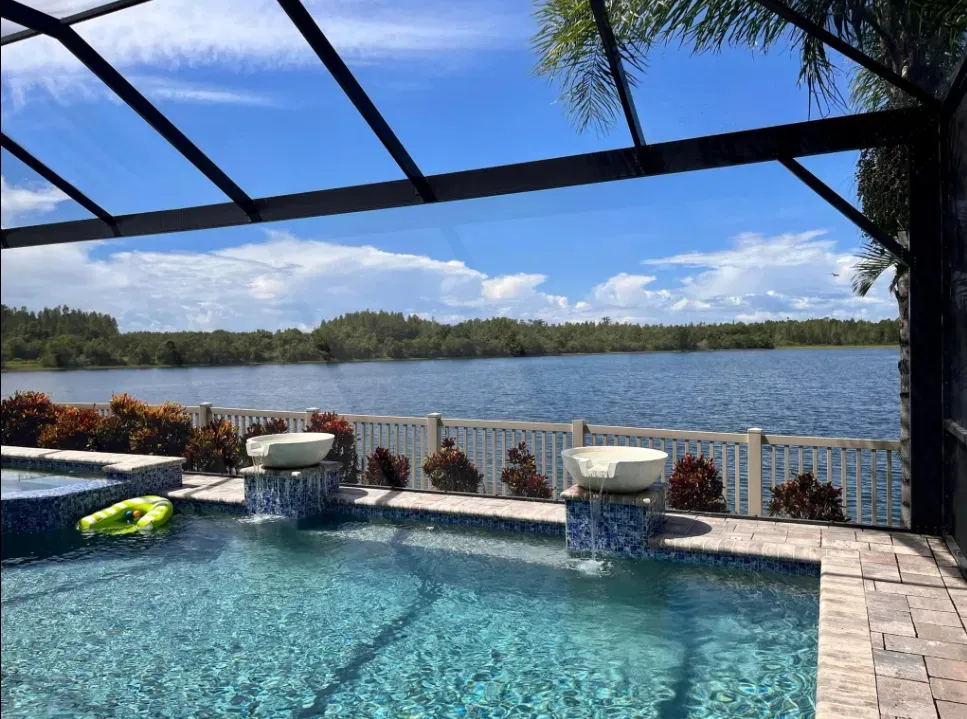
The roof also deserves a mention because sunlight comes through it along with the view. The picture above shows how direct sun can reach the pool and deck even with a screen overhead. Mesh can affect how much light passes through, but it won’t erase the sun’s angle or turn a bright roof into shade.
The screen isn’t responsible for everything
Which way the lanai faces matters. So do roof pitch and height, whether there’s a ceiling fan, dark pavers or decking that hold heat, and whether there are shade plantings outside the cage. A pool can also act as a heat sink, holding warmth in the space.
A rescreen will not turn a west-facing lanai into a shady porch. It won’t change the roof shape, move the afternoon sun, or provide shade that isn’t there. A practical assessment looks at the screen and the setting around it, rather than promising that new mesh will solve every comfort complaint.
Practical ways to help the air move
Start with the simple things. Gently rinse the mesh from the ground, without pressure-washing it. High pressure can damage screens or push spline out of its channel. If panels are slack or bellied, have them re-tensioned or replaced as appropriate. For replacement, choose mesh for the way you use the room now, not simply because it matches what was installed before. And if a panel is torn, a door is dragging, or one section has gone brittle and loud in the wind, that's a pool screen repair conversation rather than a comfort one.
Fans are the cheapest comfort win of the three. A well-placed, appropriately sized ceiling fan moves air across skin, which is what actually makes a still room tolerable, and it does that without asking the screen to do anything it wasn’t built for. Shade planted outside the cage helps too, as long as there’s room between the plants and the screen so the breeze still gets through. None of it changes every source of heat, but it can make the space feel like somewhere you want to sit.
Good pool cage maintenance is about keeping the enclosure working for your household, including the way air moves through it. If you’re seeing loose panels or a mix of old repairs, Lily Luxe provides pool cage rescreening, lanai screen repair, and screened patio repair. Request a free estimate or call 813-447-0431 to discuss the right next step.
✅ A comfort gut check
Rather than another full condition walkaround, pay attention to how the air behaves:
✅ Stand inside on a still afternoon, then step out to the yard. If the yard has a breeze and the lanai doesn't, that gap is the thing worth chasing.
✅ Hold a hand near a side panel on a bright day. Notice how much light and air seem to pass through the weave.
✅ Look up at the roof screen against the sky. A weave that reads closed up, pale or silvered is a weave that has aged.
✅ Check the ceiling fans. Sized and placed for the room? Spinning the direction you actually want?
✅ Look at what's planted tight against the west and southwest walls, where afternoon sun lands hardest.
✅ Notice an AC condenser or a dryer vent discharging into the lanai. That's heat and humidity arriving by design.
These clues help separate a screen-related airflow problem from sun exposure, fan placement and heat sources that were always there. For the condition side of things, our pool cage maintenance checklist covers the full ground-level walkaround.
When a rescreen can genuinely improve comfort
A rescreen may help the space work more comfortably when panels have gone slack and bellied, the weave has become closed-up with age and grime, patchwork panels use different mesh types, or the original mesh never suited the way your household uses the lanai.
The goal is not a cooler number on a thermometer. It’s restoring a well-fitted screen system that allows air to move as intended, with mesh selected to suit your priorities. Lily Luxe Rescreen uses high-grade, durable mesh, a tight, secure fit, and stainless steel fasteners where appropriate to the project. We also offer a dual warranty, with applicable coverage confirmed in your estimate.
A little lanai prep for the holiday week
Before guests arrive, clear the lanai, check that the fans are working, gently rinse the panels from the ground, and take a look at the door and its closer. Then make room for the people, snacks, and four-legged family members who inevitably claim the best spot.

When professional work is needed, tidy matters. Our crew stages removals neatly, keeps the yard organized, and takes care around landscaping. We aim to leave the pool, deck, and surrounding outdoor space tidy when the work is complete.
For pool enclosure rescreening or repair, we’re a local Tampa Bay team serving Lutz, Land O' Lakes, Odessa, Trinity, New Tampa, South Tampa, and Wesley Chapel. If you’ve been searching for rescreening services near me, start with a conversation about what’s affecting your space. Request your free estimate or call 813-447-0431. We’ll help you consider the mesh, fit, and project details that suit your home.
Licensed & Insured - SCC131154765