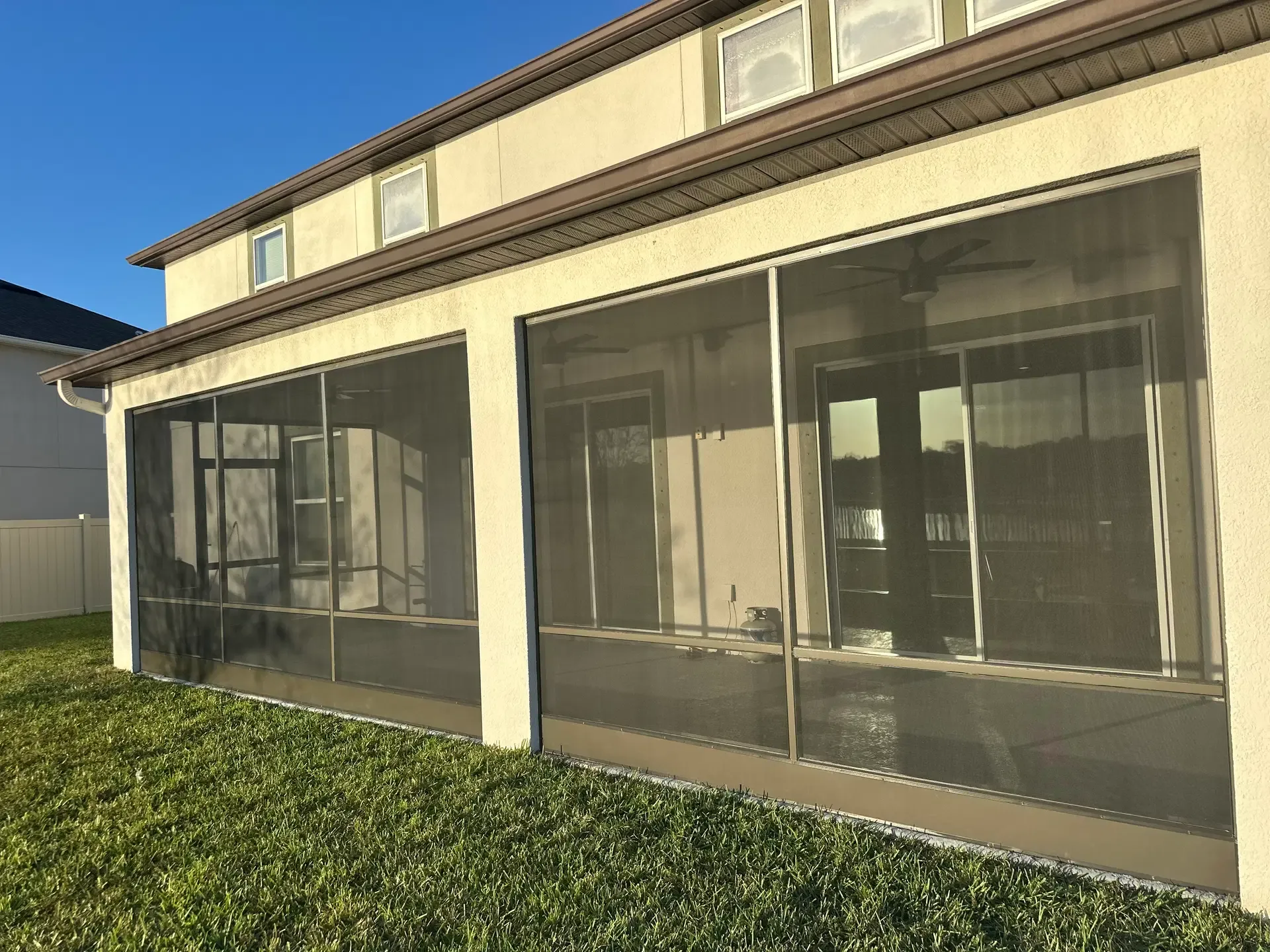
If your lanai is blazing by lunchtime, the furniture is fading, and afternoon glare turns a phone screen into a tiny mirror, you’re not imagining it. Standard insect screens keep bugs out, but let much of Florida’s sunshine stream through. Your pool cage can start to feel less like an outdoor retreat and more like a greenhouse with excellent mosquitoes.
Solar screen mesh may help make that space more comfortable by intercepting some sunlight at the enclosure. The trick is choosing the right mesh for the right panels, not automatically covering every side in the darkest screen available.
Want to talk through your enclosure? Request a free estimate , call or text 813-447-0431, or visit lilyluxerescreen.com.
How solar mesh helps tame the afternoon
Solar mesh has a tighter, denser weave than standard insect screen. It can block a significant share of the sun’s heat and UV, as well as reduce direct glare, while still allowing airflow and helping keep insects out.
Think of it as adding shade at the enclosure instead of waiting for the sun to heat the deck, furniture, and everything else first. That can make a sunny seating area more pleasant and help limit UV exposure on outdoor fabrics and finishes. It isn’t air conditioning, insulation, or a guarantee of a particular temperature change. Results depend on the product, its published specifications, the direction of the sun, and how much of the enclosure is covered.
One important detail: “solar mesh” describes a category, not one universal performance rating. Ask for the specific product name and manufacturer specifications. Exact heat, glare, and UV performance varies by product.
The honest trade-offs: shade has a look
Solar mesh can make an afternoon feel more comfortable, but it does come with compromises. The biggest one is the one you’ll notice immediately:
- The view is dimmer. Denser solar mesh looks darker than standard mesh, and the view through it is less bright and open. This is the number-one trade-off.
- It costs more per panel than standard fiberglass screen.
- It’s heavier. Correct spline size and even, secure tension matter for a clean result. Professional installation is especially important.
- It can feel too dim when the sky is overcast. Screening every wall can reduce light and the open feel you enjoy on cloudy days.
That’s why the best answer isn’t always “solar mesh everywhere.” A thoughtful layout can give you shade where the sun is doing the most damage and keep a brighter, more open feel elsewhere.
The west-wall gut check
In Tampa Bay, the direction of the afternoon sun matters. A west-facing wall is often the one that takes the brunt of late-day heat and glare. Before choosing mesh, look at where sunlight actually lands, not just where you think it ought to land.
✅ Solar-screen gut checks
- Does your enclosure face west, where afternoon heat tends to hit?
- Are cushions, rugs, or flooring fading inside the lanai?
- Does glare make a phone or TV hard to see in the afternoon?
- Does the lanai feel noticeably hotter than the rest of the house in summer?
If you answered yes to a few, ask about a zoned solar strategy: solar mesh on the sun-struck wall, with standard mesh, or pet mesh, if that suits your household, on other panels. Many enclosures benefit most from shading the afternoon side rather than screening the entire structure with dense mesh.
A real enclosure has its own angles, shade patterns, and priorities. During an estimate, we can review the panels and discuss what mesh options are available and appropriate for your project. Get your free estimate or call or text 813-447-0431.
Solar mesh isn’t the only shade option
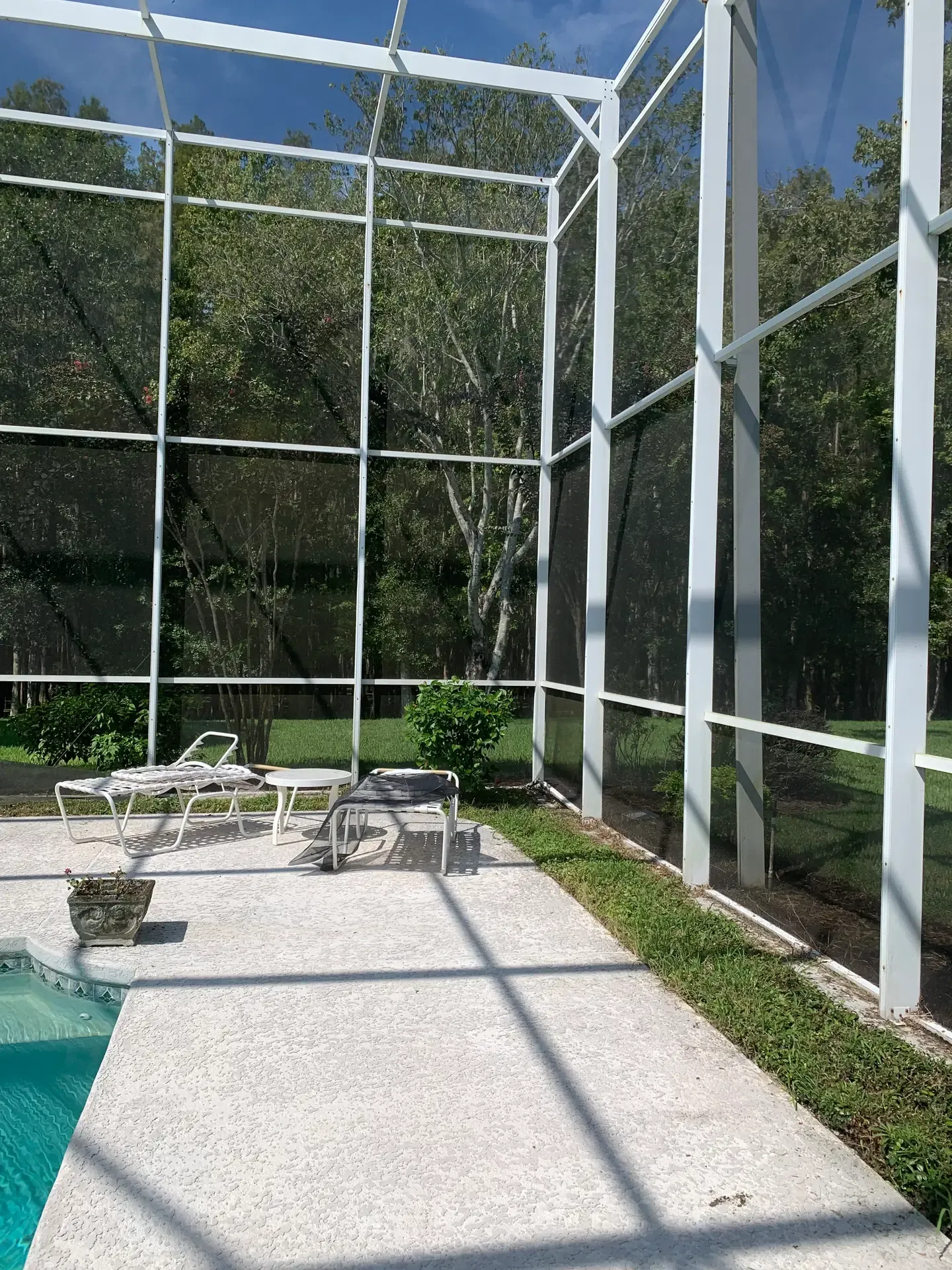
If you want more flexibility, or prefer to keep the pool cage mesh open and bright, consider shades installed inside the enclosure. Retractable shade panels, for example, can be lowered when the afternoon sun is strongest and opened when you want an unobstructed view.
That approach can make sense for a specific lounge or dining area. Solar mesh, by contrast, is a fixed choice for the panels where it’s installed. The right fit depends on whether you want steady shade, adjustable shade, or a combination.
There’s no one-size-fits-all answer. If you’re already planning lanai screen replacement, a pool screen replacement, or patio screen repair, it’s a good time to discuss the sun-facing panels before the new screen goes in.
Installation details matter with heavier mesh
A premium material still needs a premium fit. Because solar mesh is heavier than standard insect screen, the installer must match the spline to the screen and the frame groove, then tension the panel correctly. A poor fit can lead to loose or distorted screen. A neat, secure installation is part of the result, not an optional finishing touch.
At Lily Luxe Rescreen, our work is built around high-grade durable materials, expert installation for a tight, secure fit, and attention to the details that help your enclosure look polished. We use stainless steel fasteners where appropriate to the project. Ask about our dual warranty for workmanship and materials; the applicable coverage and terms should be confirmed in your estimate.
Keep the screen, and the frame, on your maintenance list
Solar mesh still needs regular cleaning and spline checks, just like any screen. Rinse away loose debris and follow the product manufacturer’s care guidance. The darker mesh may show less staining than lighter materials, but it’s not maintenance-free. If a panel loosens, pulls away, or gets damaged, have it assessed before the problem spreads.
And remember: replacing mesh doesn’t automatically repair or certify the enclosure frame. If you’re considering pool screen enclosure repair or pool cage maintenance, have the frame and attachments reviewed as part of the project.
Local help, from Lutz to South Tampa
Lily Luxe Rescreen is a Florida Certified Specialty Contractor, SCC131154765, serving homeowners in Lutz, Land O’ Lakes, Odessa, Trinity, New Tampa, South Tampa, and Wesley Chapel. We help families restore pool cages, lanais, and patios with careful installation and a clean, luxe finish.
If your home is in an HOA community, check with your Architectural Review Committee (ARC) or HOA before changing the enclosure’s appearance. Approval rules vary. Ask what they require and whether they want the mesh product name, color, product specifications, panel locations, a sample, contractor information, or a written scope. Getting the documentation and written approval in place before work begins can help avoid a frustrating mid-project surprise.
Ready to make the afternoon more livable? Request your free estimate , call or text 813-447-0431, or learn more about our rescreening services and screen options. We’ll help you weigh the shade, view, and airflow, and find a plan that feels right for your lanai.