
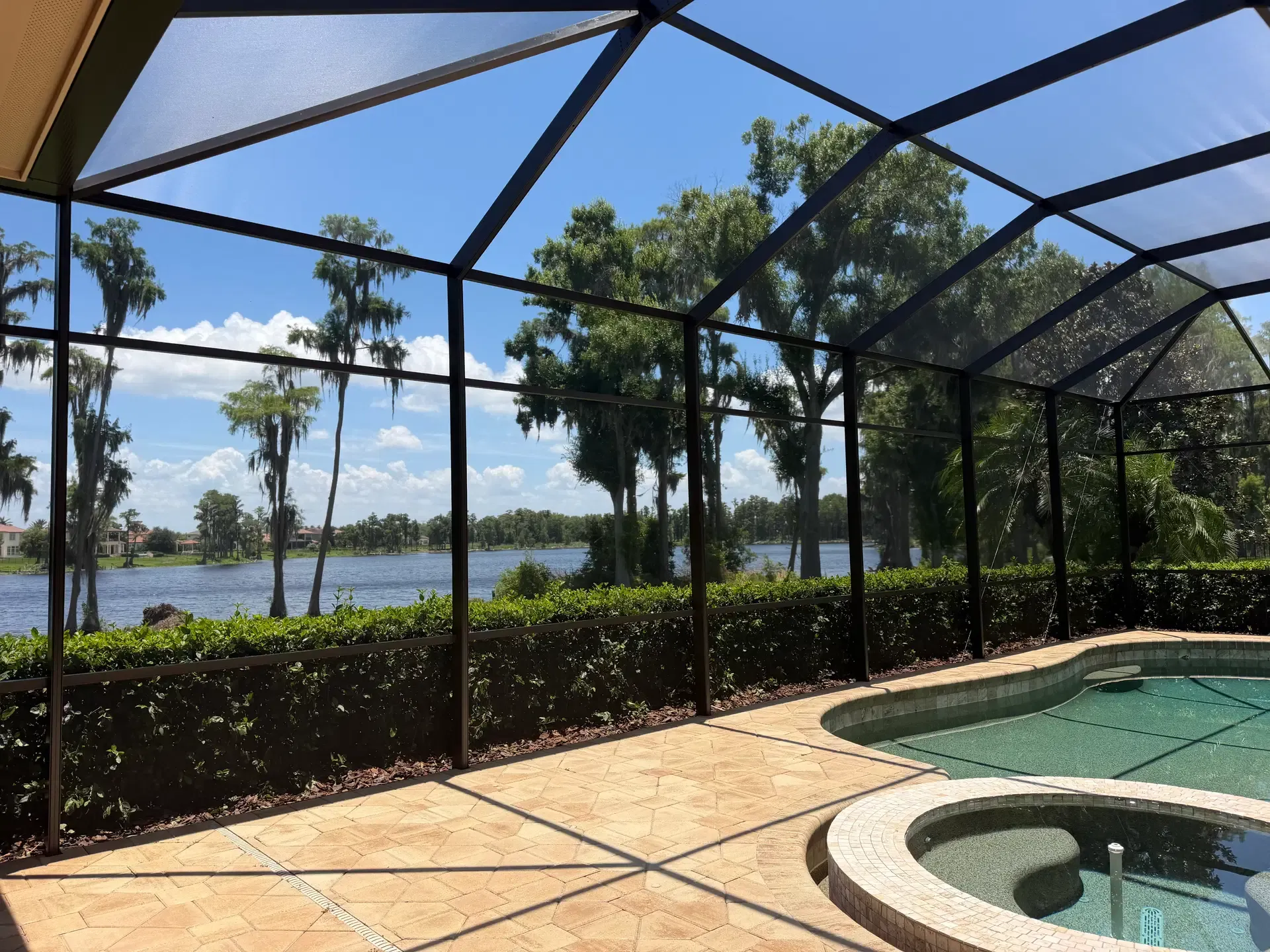
A pool cage can have beautiful new mesh and still be vulnerable at the edges. The small, easy-to-overlook component that holds each panel in place is screen spline: a flexible cord pressed into the frame’s groove to clamp the mesh securely.
When an old or poorly matched spline lets go, a panel can loosen or pull out, often at the worst possible time. Florida wind and storms put extra demands on an enclosure, so the details behind a clean rescreen matter. Lily Luxe Rescreen installs fresh spline matched to the frame channel and screen material, with careful, even tension for a tight, secure fit.
Wondering whether your enclosure needs a few panels or a full rescreen? Request a free estimate or call 813-447-0431.
What screen spline does, and why it matters
Spline is the flexible retainer that sits in a narrow channel around a screen panel. During installation, a technician presses the mesh and spline into that groove with a roller. The spline wedges the mesh in place, helping hold the panel under consistent tension.
Think of it as the finishing line around each panel: you may barely notice it when everything is right, but if it’s loose, brittle, or the wrong fit, the screen can lose its hold. A fresh panel isn’t just mesh. It’s mesh, a suitable spline, a compatible channel, and skilled installation working together.

Why old spline can fail
Florida’s sun and weather are hard on exterior materials. Over time, vinyl spline can harden, shrink, or lose elasticity. It may no longer press firmly into the groove, or it can become brittle enough to crack or break during removal and installation.
That matters when wind pushes and pulls on a screen panel. If the spline no longer grips properly, or wasn’t seated evenly to begin with, the mesh may loosen or pull out. Reusing aged spline during a rescreen can preserve a weak link right around the edges of brand-new mesh.
Storm damage has more than one cause, and spline alone does not determine whether an enclosure will withstand severe wind. Frame condition, fasteners, panel size, mesh, exposure, and the enclosure’s overall design all matter. But reusing worn spline can undermine the panel’s hold, so replacing it during a rescreen is an important part of doing the job properly.
For help understanding when storm damage calls for a repair or a larger project, see our guide to pool-cage storm damage: repair or rescreen?.
Spline size is not a guessing game
Spline is commonly available in sizes around .125 to .160 inches, among others. That range is a starting point, not a universal answer. The right fit depends on the dimensions and shape of your frame’s channel, as well as the screen material being installed.
A thicker specialty mesh can require a different spline selection than standard pool-and-patio mesh. For example, Phifer’s spline sizing guidance notes that certain thicker products, including PetScreen®, call for a smaller spline size than standard screening in the same frame. That’s why “bigger must hold better” is not a reliable rule. Oversized spline can be difficult to seat or can affect the mesh; undersized spline may not hold firmly.
The practical rule is simple: measure the channel, identify the spline profile, and match the spline to both the frame and mesh. The old spline can offer a clue, but it shouldn’t be the only reference, especially if it has changed shape with age.
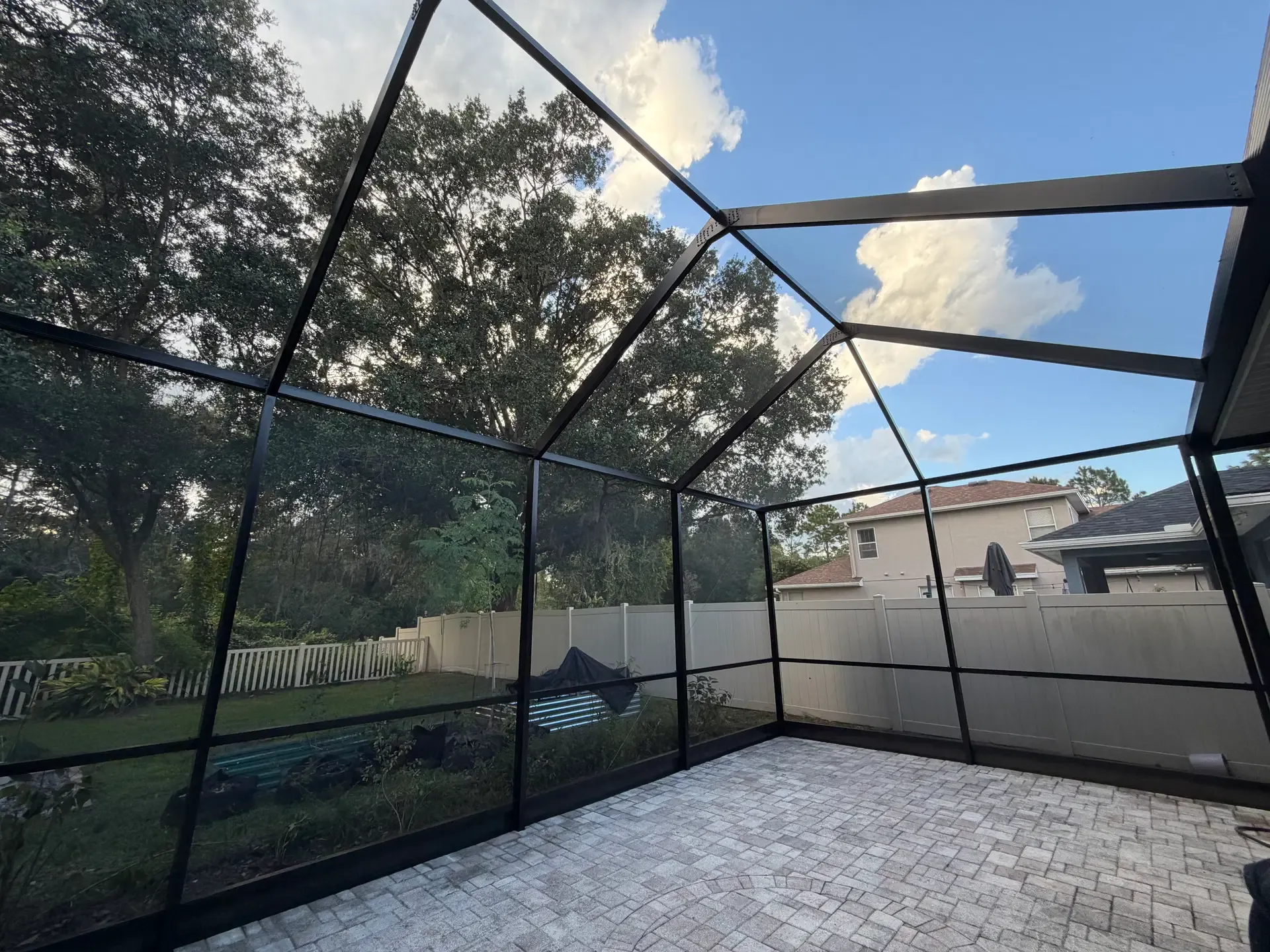
Round or flat: the profile matters too
Spline comes in different profiles. Round and flat spline are not interchangeable. Some channels are designed for a particular shape, and a close-looking substitute may not seat or grip as intended.
Flat spline is used in specialized channels, including some pool enclosure systems. Other frames take round spline. The right choice depends on the actual extrusion and channel, not a general rule about what every pool cage uses. A technician should identify the frame’s profile and select a spline that fits it.
Our approach is to match spline to the channel and mesh instead of guessing from a label or forcing whatever happens to be on hand.
Why hollow-core vinyl spline is used, and why it gets replaced
Hollow-core vinyl spline has a flexible, compressible construction. That elasticity helps it wedge into a compatible channel and hold the screen in place. But the fact that it flexes during installation doesn’t make it a permanent component.
During a rescreen, old spline has already spent years in the elements and may have lost the flexibility needed for a dependable fit. We install fresh spline with every panel we rescreen; we don’t reuse old spline. It’s a small material choice that supports the larger goal: a clean, secure installation.
The real quality marker: even, consistent tension
Spline size and profile matter, but they’re only part of the result. The installer also needs to keep the screen square and apply tight, even, consistent tension as the spline is rolled into the channel.
Too little tension can leave a panel slack or wavy. Uneven tension can create ripples or pull harder on one edge than another. A smooth finish is more than a pretty detail: it’s evidence that the panel has been installed with care.
At Lily Luxe Rescreen, we pair high-grade mesh with fresh, properly matched spline and expert installation. When stainless steel fasteners are in the scope of work, we use them as part of a durable, polished result. Our dual warranty offers coverage for workmanship and materials; the applicable terms are confirmed in your estimate.
Ready to refresh a pool cage, lanai, or patio screen? Request a free estimate or call 813-447-0431. We’ll assess the enclosure and explain the options for your project.
Quick checklist: questions worth asking
If you’re comparing estimates for pool cage rescreening or patio screen repair, ask:
- ✅ Will you replace the old spline during the rescreen?
- ✅ How will you match spline size and profile to the frame channel and mesh?
- ✅ How will you check for even tension and a secure fit?
- ✅ What mesh options suit my priorities, such as visibility, insect protection, or pets?
- ✅ What warranty coverage applies to my specific materials and work?
If you’re considering pet-resistant mesh, read our guide to choosing pet screen for high-contact areas. And for common patio panel issues, our Tampa patio screen repair guide explains what a professional may need to assess.

Local rescreening help across Tampa Bay
Lily Luxe Rescreen serves homeowners in Lutz, Land O’ Lakes, Odessa, Trinity, New Tampa, South Tampa, and Wesley Chapel. Whether your enclosure needs a few replacement panels or a full refresh, we’ll help you choose a solution that suits your home and how your family uses its outdoor space.
If your community has an Architectural Review Committee (ARC) or HOA, check its current requirements before scheduling work. Rules vary, even for a rescreen. Your association may ask for a project description, mesh or material specifications, photos, dimensions, contractor details, or a completed application. Keep the approval and project documents for your records. Our Tampa Bay HOA and permit guide explains the separate approval and permitting tracks.
Want a fresh set of eyes on your enclosure? Request a free estimate or call 813-447-0431. Lily Luxe Rescreen LLC is a licensed Florida contractor, SCC131154765. We’ll help you restore a crisp, comfortable outdoor space with quality materials and a secure, premium finish.