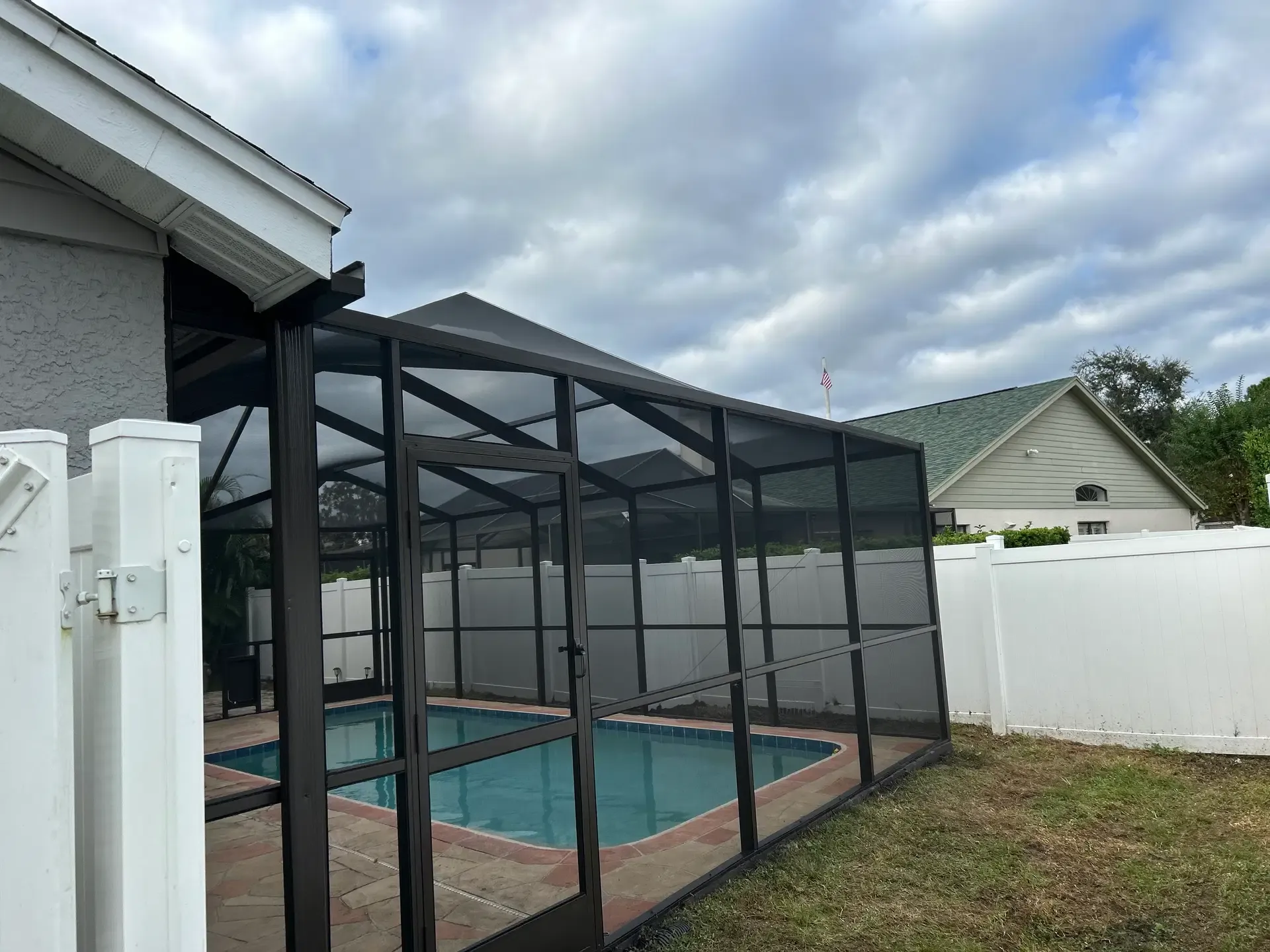
Rust streaks down a pool cage. A frame that looks chalky in the afternoon sun. And the question many homeowners eventually ask: “Is my cage going to rust away?”
Usually, the answer starts with a reassuring detail: your pool cage is aluminum on purpose. Extruded aluminum is the Florida-standard framing choice because it handles moisture differently from steel. But rust-colored marks still deserve attention. They can point to corroding fasteners or a connection where dissimilar metals meet, not necessarily a failing frame.
If you’re seeing damage or planning a refresh, Lily Luxe Rescreen can help assess whether your enclosure is ready for new mesh. Request a free estimate online or call 813-447-0431.
Why aluminum is the Florida favorite
Florida asks a lot of outdoor structures: humidity, rain, poolside moisture and, in coastal areas, salt in the air. Aluminum is widely used for pool enclosures because it doesn’t rust like iron-containing steel. When exposed, aluminum forms a thin oxide layer that helps protect the underlying metal from further corrosion. The University of Florida explains this protective behavior in its guidance on corrosion in Florida.
Steel behaves differently. Its rust can flake or spread beneath a coating, leaving the metal more vulnerable over time. Even protected steel depends on its coating staying intact, and humid or salty exposure can be hard on that protection.
Contractor sources cite approximate service-life ranges of 25–40+ years for aluminum enclosures and about 10–20 years for steel. These broad estimates depend on construction, exposure and upkeep; they are not a promise about any particular cage. Design, installation, connections and local conditions all matter. Learn more about aluminum enclosures in Florida.
Put simply, aluminum offers a durable frame for the screens and the outdoor space you enjoy with family and friends. It is not invincible, but it is a sensible choice for Florida’s demanding climate.
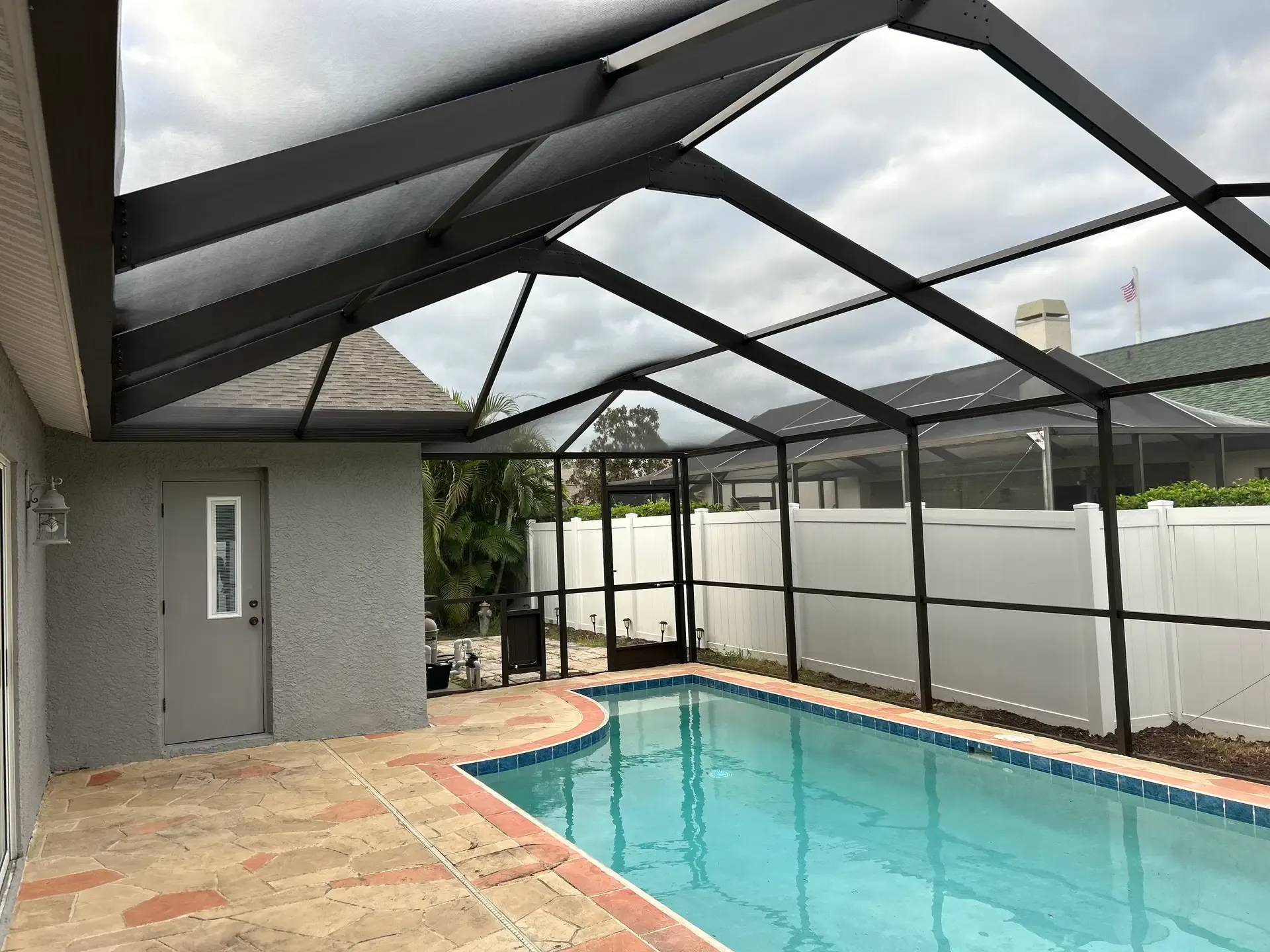
The rust-streak twist: it’s often the hardware
Seeing rust on an aluminum enclosure can feel like a plot twist. But the aluminum frame itself is usually not what’s making the rusty stain. Steel screws, anchors or other hardware can corrode and leave rust-colored trails across nearby aluminum or screen components.
There’s another factor to know about: galvanic corrosion. When different metals touch in the presence of moisture, the less resistant metal may corrode around the connection. That doesn’t mean the aluminum is “rusting,” but it can mean the area around a fastener needs a closer look. Salt exposure can make corrosion concerns more pressing.
That’s why fastener quality and suitability matter. Stainless steel fasteners, often Type 304 for suitable inland applications and Type 316 for greater salt-spray exposure, may be appropriate depending on the connection and project. Stainless steel is corrosion-resistant, not corrosion-proof. Pairing it with aluminum still calls for thoughtful material selection and installation details.
For a closer look at the telltale signs and why hardware can matter, read our companion article, Rusted Fasteners: The Hidden Reason Your Pool Cage Screens Keep Coming Loose.
✅ Quick gut checks for a homeowner
A few ground-level observations can help you describe what you’re seeing:
- ✅ Rust-colored streaks near a screw or joint? The fastener or nearby hardware may be the source.
- ✅ Chalky residue or a dull finish? Aluminum can oxidize, and coatings can weather over time. That’s different from steel rust.
- ✅ Pitting, flaking or visible deterioration at a connection? Have the area evaluated rather than assuming new screen will solve it.
- ✅ A sagging or visibly shifted frame section? That calls for professional assessment before rescreening.
- ✅ Fresh mesh, but recurring movement or looseness? Ask whether the frame and attachments are sound enough to support the new screen.
These clues aren’t a diagnosis. The important thing is not to treat every orange mark as a ruined frame, or every screen problem as a mesh-only problem. A professional can help distinguish ordinary finish wear from concerns that deserve closer evaluation.
What this means for your rescreen
A sound aluminum frame is an excellent backbone for a full rescreen. If the enclosure is structurally suitable, replacing worn or torn mesh can restore a cleaner view, improve insect protection and give your outdoor space a polished new feel.
Rescreening is also a practical time to identify visible fastener concerns. Depending on the connection and project scope, corroded fasteners may be replaced with stainless steel fasteners where appropriate to the project. The right selection depends on the existing materials, exposure and condition of the enclosure, not simply on choosing the shiniest screw.
At Lily Luxe Rescreen, our work pairs high-grade mesh, careful installation for a tight, secure fit, and a premium finish. Our dual warranty includes applicable coverage confirmed in your estimate. We’ll discuss the screen options and work included so you know what your rescreen covers, and what may need a separate evaluation.
Have questions about what your enclosure needs? Request your free estimate or call 813-447-0431 to talk through the next step.
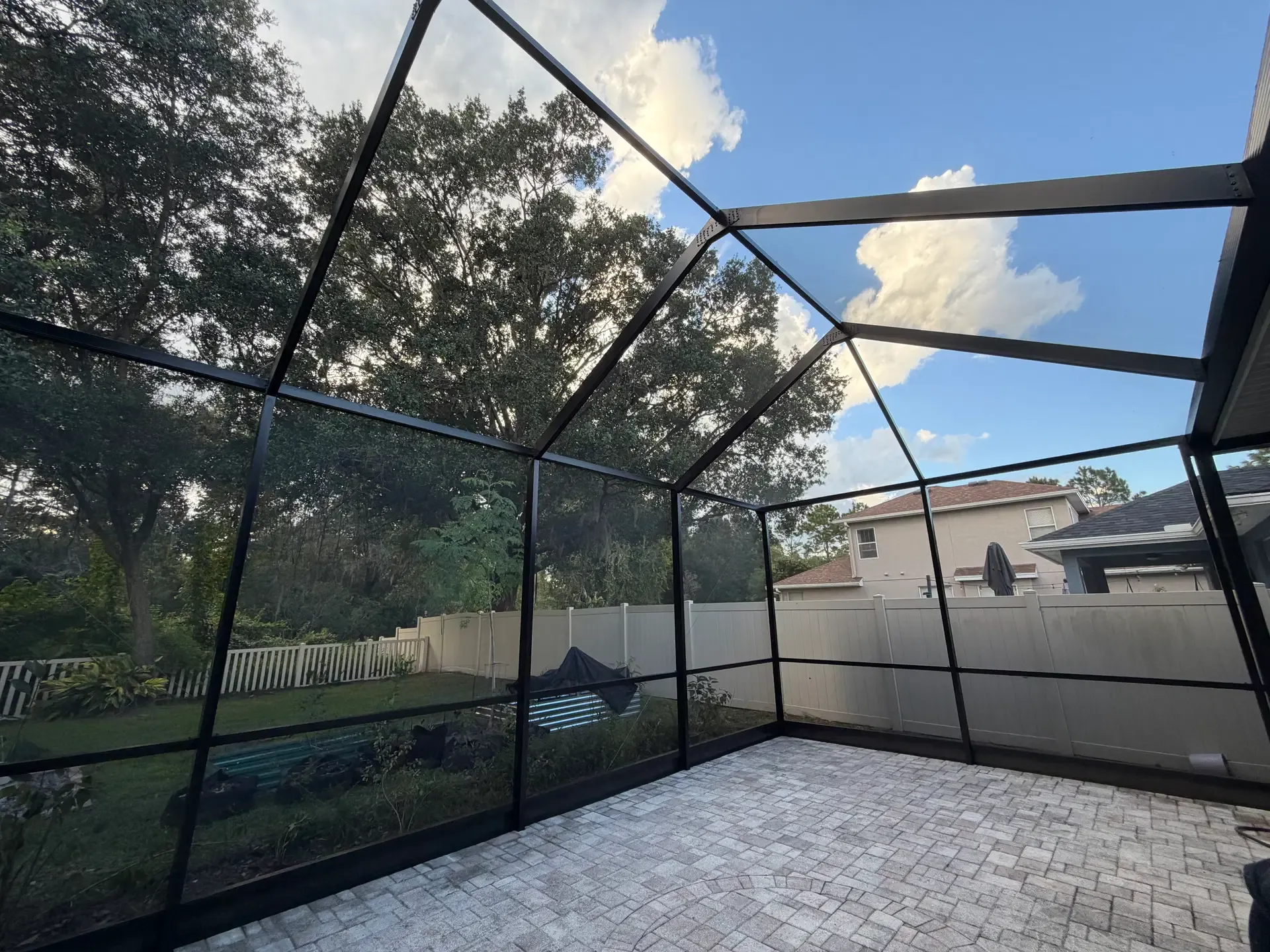
Honest caveats: aluminum still needs a thoughtful eye
Aluminum is a durable frame choice, but it is not maintenance-free. Over time, it can oxidize, pit or develop a chalky appearance. Anodized or coated finishes can help resist weathering, but the finish and the metal’s condition both matter. A faded or chalky look alone does not establish that the frame is structurally compromised.
Mixed-metal contact, moisture and exposure can also contribute to corrosion at connections. If you see a rust streak, significant pitting or a fastener that appears badly deteriorated, have the condition assessed. And if a section is sagging, bent or visibly corroded, new mesh is not a substitute for professional frame evaluation.
Please don’t try to DIY-match frame repairs or swap structural hardware based only on appearance. Frame members, connections and fasteners need to suit the enclosure and the work being done. A professional can help clarify whether the issue relates to the screen, the hardware, the frame or more than one of those things.
If a project involves changing the frame color or coating, check your HOA or Architectural Review Committee requirements before work begins. Approval and documentation rules vary by community. For background on that separate design topic, see The Frame Gets the Glare.
If you’re concerned about a separate enclosure-support issue, see our guide to braces, cables and enclosure support.
Local rescreening, with the frame in view
Lily Luxe Rescreen is locally owned and serves homeowners in Lutz, Land O' Lakes, Odessa, Trinity, New Tampa, South Tampa and Wesley Chapel. Whether you’re planning pool screen enclosure repair or thinking ahead about pool cage maintenance, a closer look at the frame and fasteners can help you make an informed decision about new mesh.
Explore our rescreening services or request your free estimate online . Call 813-447-0431 to discuss your enclosure and arrange an estimate. Lily Luxe Rescreen LLC is a Florida Certified Specialty Contractor, license SCC131154765.