

When your pool cage starts humming, whistling, or rattling on a breezy Florida afternoon, it’s more than an unexpected backyard soundtrack. Loose screens or moving connections may be vibrating in the wind. The noise is a useful clue, but it doesn’t tell you exactly what’s wrong.
A common culprit is screen mesh that has lost tension. Worn or displaced spline, stretched panels, or loose hardware can all contribute. But here’s the important part: check the structure first. If the frame is shifting or bowing, simply tightening or replacing screens may repeat the problem instead of fixing what’s behind it.
Lily Luxe Rescreen helps homeowners across the Tampa Bay area get to the cause, then restore their outdoor space with premium materials and a crisp, secure finish. Request a free estimate online or call 813-447-0431.
What that pool-cage hum may be telling you
Wind moving through an enclosure can make a loose screen panel vibrate against its frame. Depending on the panel and the way it’s moving, you might hear a low hum, a sharper whistle, a flutter, or a rattle.
Some common possibilities include:
- ✅ Loose, stretched, or sagging mesh that flutters or drums in a gust.
- ✅ Worn or displaced spline: the flexible retainer that holds mesh in its frame channel.
- ✅ Loose or corroded fasteners that let frame joints or attached parts vibrate.
- ✅ Movement in the enclosure structure, including a concern with cables or bracing.
- ✅ A pump or pipe touching the frame, creating a vibration that sounds wind-related.
Sound is a clue, not a diagnosis. A whistle doesn’t prove that a screen needs replacement, and a rattle doesn’t automatically mean the whole cage needs major work. A professional assessment can help separate a screen issue from movement in the structure.
Start with the frame, not the tension
Before anyone re-tensions screens, the enclosure’s visible frame, connections, and support components should be considered. Look from the ground for signs such as a section that appears out of alignment, new gaps at joints, a door that no longer closes smoothly, or panels that keep coming loose in the same area.
If the frame is bowing, shifting, or flexing, a fresh screen installation alone may not address the underlying movement. The structure needs the right assessment before screen work can be expected to hold its fit. Don’t climb on the cage, tug on posts, or try to tighten structural hardware or cables yourself.
Cables and bracing can be part of an enclosure’s support system. If you see a cable that appears slack or damaged, or notice repeated screen trouble in one section, leave it alone and get qualified guidance. Read more in our guide to pool-cage cables, braces, and structural support.
A quiet, tight screen is the goal. A sound frame is the starting point.
Once the structure checks out, look at mesh and spline
If the frame and connections are in suitable condition, the screen itself may be the source of the noise. Florida heat, sun, and years of use can leave mesh stretched or slack. When a panel moves in the breeze, it may vibrate against the frame or produce a fluttering sound.
Spline matters, too. If it has hardened, shrunk, cracked, or popped out of its channel, it may no longer hold the mesh securely. Replacing a panel but reusing aged spline can leave a weak link at the edge. During a rescreen, we use fresh spline for every panel, matched to the frame channel and screen material. For a closer look at this often-overlooked detail, visit our screen spline deep dive.
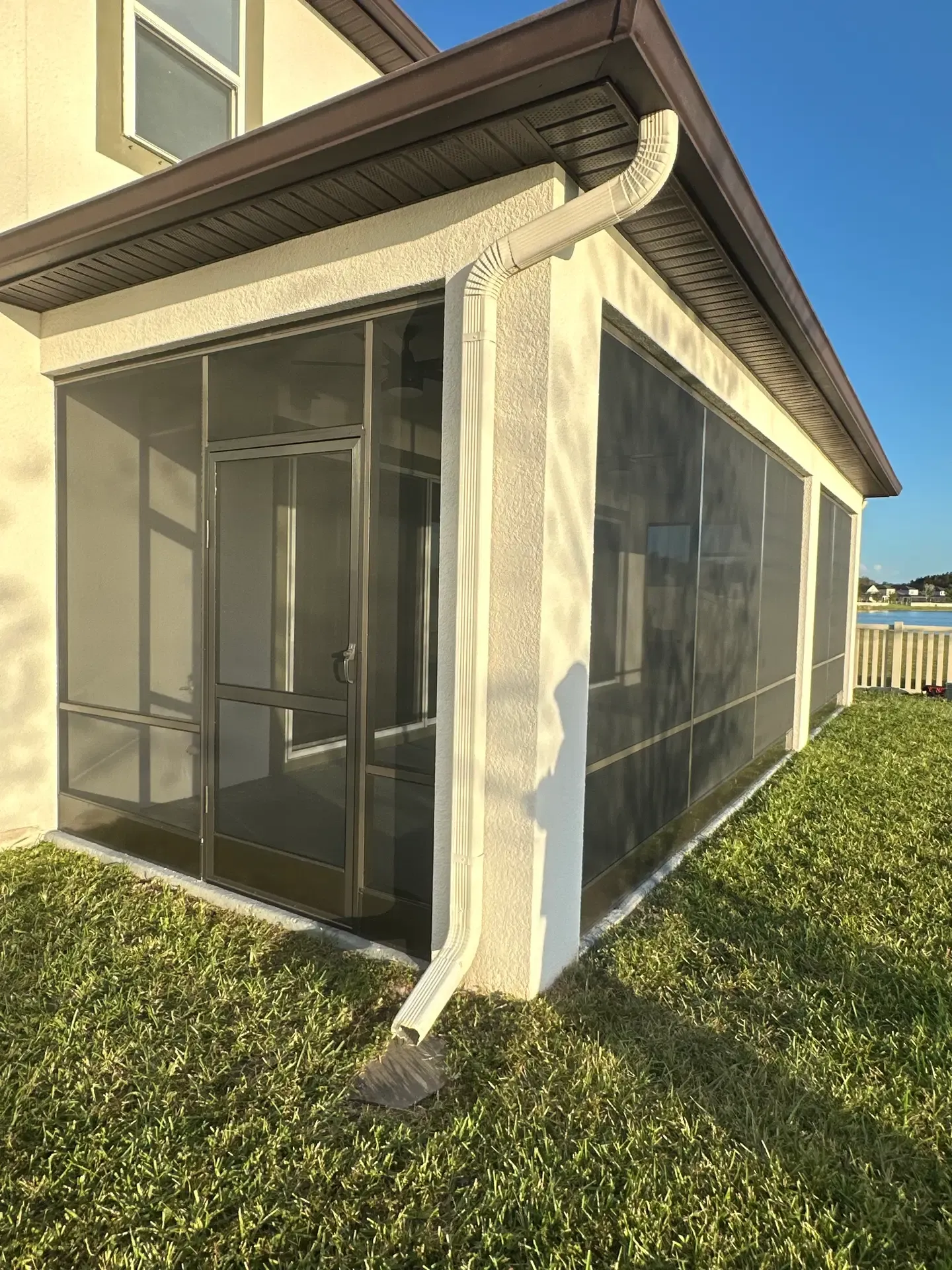
A polished result is about more than new mesh. We pair high-grade screen materials with expert installation for a tight, secure fit. A properly fitted panel should look smooth and sit evenly in its frame, not wave like a tiny sail every time the breeze picks up.
When the rattle sounds metallic
A higher-pitched click, ping, or rattle may point to movement at a frame joint or attached component rather than mesh alone. From a safe spot on the deck, you can note whether the sound seems to come from a particular section. Look for visible corrosion, missing fasteners, gaps at joints, or a part that appears newly loose, but don’t remove or tighten structural hardware.
Stainless steel fasteners are part of our premium approach where appropriate to the project. The right fastener depends on the connection, materials, and condition of the enclosure. If you’re noticing rust-colored streaks or loose connections, our guide to rusted pool-cage fasteners explains why the surrounding connection deserves attention, too.
Sometimes the enclosure isn’t the source at all. A pool pump, pipe, or other equipment touching the frame can transfer vibration and mimic wind noise. If the sound continues when the wind has eased, or changes when equipment is switched off, mention that when you request an assessment.
Have a section that keeps buzzing or a panel that keeps coming loose? Request a free estimate or call 813-447-0431. We’ll help you understand whether the concern appears to be the screen, spline, or something that needs a closer structural look.
A durable rescreen should feel, and look, finished
Once the enclosure’s condition is understood, pool screen enclosure repair may involve replacing affected panels or completing a broader rescreen. The right scope depends on the mesh, spline, frame, access, and any visible issues with connections. A one-panel fix is not a substitute for resolving a structural concern, and a structural repair is not automatically part of rescreening. Ask what’s included in your project estimate.
At Lily Luxe Rescreen, we focus on high-grade mesh, expert installation, and details that deliver a premium finish. Our work includes a dual warranty, with applicable coverage confirmed in your estimate. The goal is a cleaner-looking, more comfortable outdoor space your family can enjoy, not a quick cosmetic cover-up.
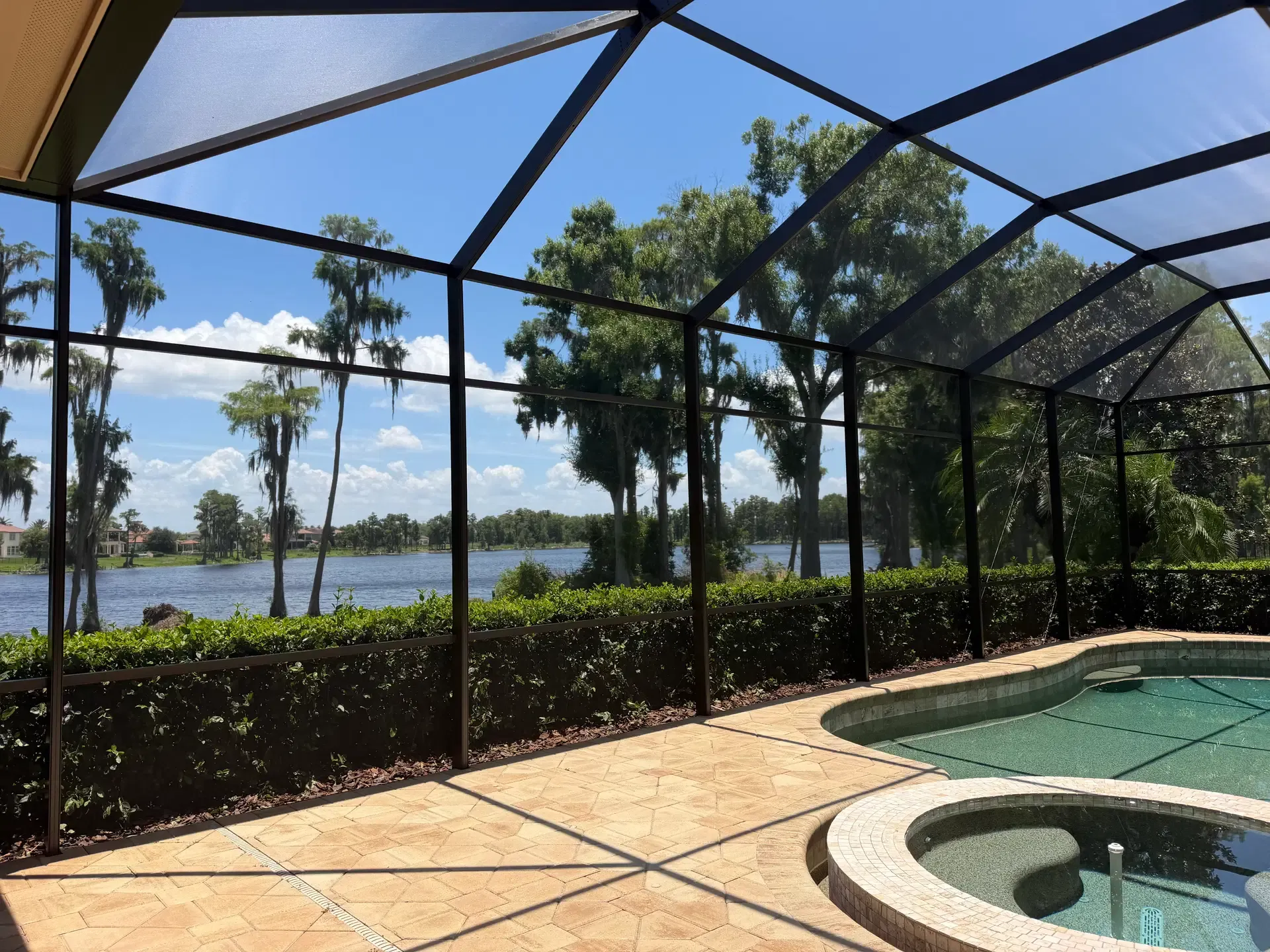
Good pool cage maintenance means paying attention when something changes. Notice when the noise occurs, which section seems to move, and whether the sound is a hum, whistle, or metallic rattle. A short note or photo from the ground can help explain what you’re hearing. Avoid climbing, pulling on the mesh, or adjusting cables. If your community requires HOA sign-off for rescreening or related work, confirm its requirements before scheduling.
We serve homeowners in Lutz, Land O’ Lakes, Odessa, Trinity, New Tampa, South Tampa, and Wesley Chapel. From a breezy backyard in Lutz to a lakeside enclosure in Land O’ Lakes, a noisy screen deserves a careful look, not guesswork.
Quiet the rattle. Keep the luxe.
When a pool cage sings in the wind, listen to the clue, but check the frame before addressing screen tension. Once the structure is understood, worn mesh, failed spline, or compatible hardware can be addressed with the right plan.
Ready to enjoy a quieter, beautifully fitted enclosure? Request your free estimate online , call 813-447-0431, or explore our rescreening services.
Lily Luxe Rescreen LLC is a Florida Certified Specialty Contractor, SCC131154765.